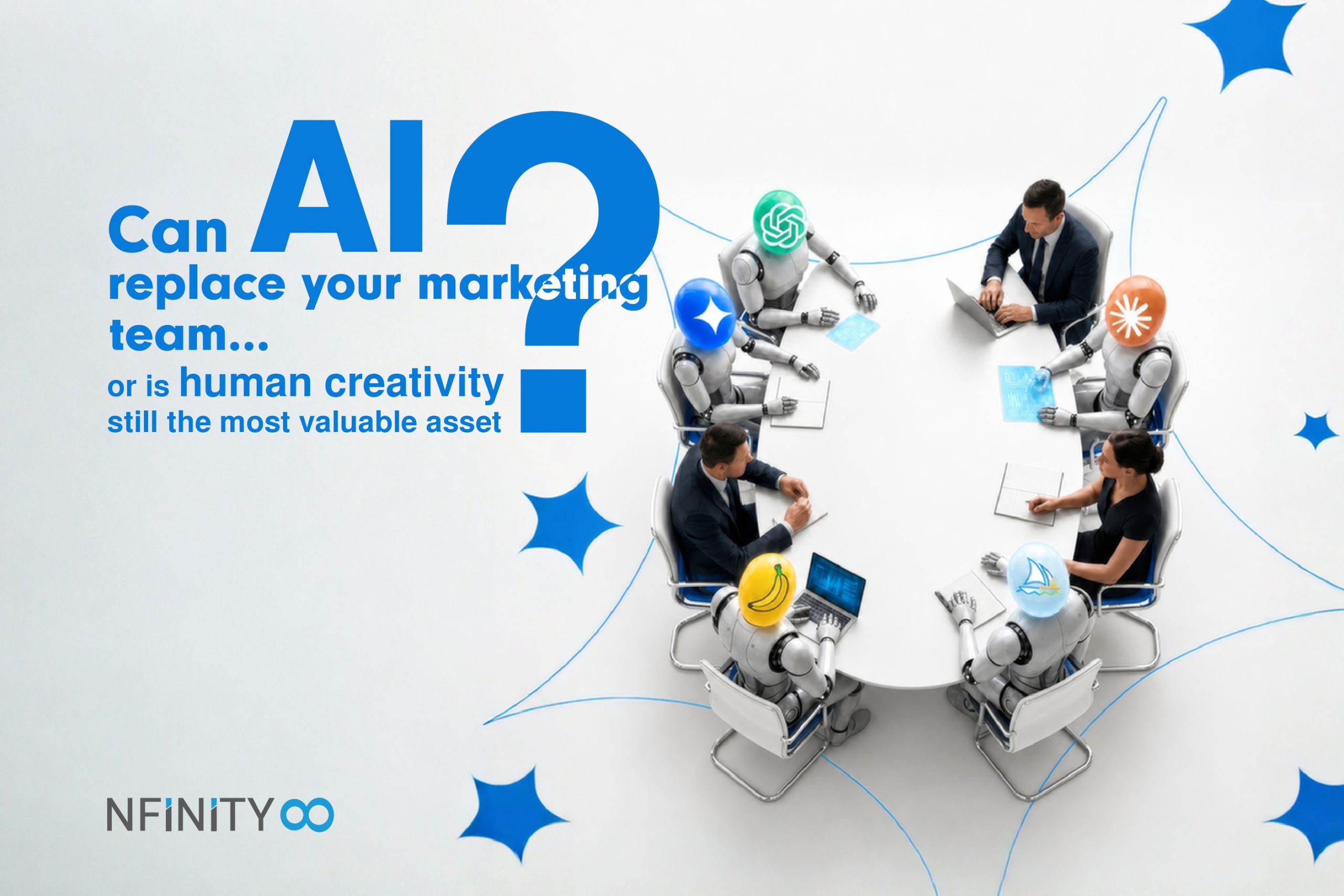
How Artificial Intelligence Is Transforming Creative Work Without Replacing Human Innovation
Artificial Intelligence (AI) is transforming industries worldwide, and the design and marketing sector is no exception. From generating marketing copy and designing graphics to editing videos and producing animations, intelligent technologies are changing how businesses approach content development. As AI solutions continue to evolve, many organizations are asking a crucial question: Can AI replace creative departments?
The rapid adoption of AI-powered tools has sparked both excitement and concern across creative industries. Businesses are embracing these technologies to improve productivity, reduce production costs, and accelerate content creation. Creative professionals are evaluating how these advancements may impact their roles and the future of the industry.
While AI has become increasingly sophisticated, the conversation is not simply about replacement. Instead, it is about understanding how technology can complement human creativity and support stronger business outcomes.
The reality is that successful creative work depends on more than speed and efficiency. It requires strategic thinking, emotional understanding, cultural awareness, and originality—qualities Do AI’s Have The Potential To Replace Creative Departments?
that remain uniquely human. As more businesses continue to invest in AI solutions. The most effective approach is often one that combines automation with professional expertise to achieve the best possible results.
The Rise of Artificial Intelligence in Design and Content Production
Artificial intelligence has rapidly become an asset for businesses looking to improve efficiency and scale their marketing efforts. From automated design platforms to AI-powered content generation tools. Businesses now have access to technologies that can perform tasks that previously required significant time and resources. These systems can analyze large amounts of data, identify trends, and generate content in a matter of seconds.
For companies seeking faster turnaround times and lower production costs, these solutions offer several advantages:
- Faster content production
- Increased efficiency
- Data-driven insights
- Scalable content development
- Enhanced marketing personalization
These capabilities have made intelligent technologies an increasingly important part of modern design services, digital marketing strategies, and video production workflows. As businesses compete for attention in crowded digital spaces. The ability to produce and distribute content quickly has become a significant advantage. However, speed alone does not guarantee success, which is why human oversight remains essential throughout the creative process.
What Do These Technologies Do Well
Automation and machine learning systems excel at repetitive and data-intensive tasks. They can analyze trends, generate multiple concepts, optimize advertising campaigns, and automate portions of the content development process. This allows teams to spend less time on routine activities and more time focusing on strategy and innovation.
For example, these platforms can assist with:
- Content generation
- Graphic design automation
- Video editing support
- Marketing campaign optimization
- A/B testing
- Visual asset creation
AI can help businesses increase productivity and improve efficiency across multiple departments. Marketing teams can quickly test campaign variations. Designers can accelerate concept development, and video production teams can streamline editing workflows. These efficiencies can contribute to stronger results and better use of resources.
The Human Element of Innovation
Despite their impressive capabilities, these technologies have limitations. Great ideas are not simply about producing content—they are about understanding people. Successful branding, marketing campaigns, and visual storytelling rely on empathy, cultural awareness, emotional intelligence, and strategic thinking. These qualities allow professionals to develop compelling narratives that resonate with audiences and strengthen brand identity.
Machine learning systems can analyze data and identify patterns, but they cannot genuinely understand:
- Human emotions
- Cultural nuances
- Consumer psychology
- Brand identity
- Real-world experiences
The most memorable campaigns often emerge from unique human insights, collaboration, and problem-solving rather than algorithmic outputs. Audiences connect with stories that reflect authentic experiences and emotions. This distinction remains one of the strongest arguments against the complete replacement of creative departments.
Why Design and Video Production Still Need Human Expertise
The rise of intelligent technologies has significantly impacted industries such as graphic design, animation, and corporate video production. However, businesses continue to rely on experienced professionals to transform ideas into meaningful brand experiences.
Whether creating a new visual identity, producing motion graphics, developing branded content, or launching a marketing campaign, strategic direction is essential. Human professionals understand business objectives, audience expectations, and brand positioning in ways that technology cannot fully replicate. They ensure that every creative decision supports broader organizational goals while maintaining consistency across all channels.
This is where specialized agencies continue to play a vital role. Organizations recognize that technology alone cannot replace the value of expert direction, storytelling, collaboration, and brand strategy. Human expertise remains critical for producing content that not only looks impressive but also delivers measurable business results.
The Future of Design Departments: Collaboration Over Replacement
Rather than replacing departments entirely, artificial intelligence is reshaping how they operate. Many businesses are using AI and automation tools to improve efficiency. This will allow creative teams to focus on higher-value activities, including:
- Brand strategy
- Storytelling
- Campaign development
- Customer experience design
- Video production and visual communication
- Innovation and leadership
The future is not about choosing between human expertise and automation. It is about leveraging the strengths of both. Businesses that successfully integrate AI into their creative workflows can improve productivity while maintaining the originality and branding that audiences value.
Human Creativity and Technology: The Perfect Partnership
The most successful brands will be those that combine technological efficiency with human ingenuity. Automation platforms can accelerate workflows and streamline production processes, but people provide the vision, originality, and emotional connection that audiences remember. Creative professionals bring context, judgment, and strategic thinking that technology cannot fully replicate.
Organizations looking to stay competitive should view these advancements as powerful tools rather than replacements for talented designers, strategists, marketers, and video production specialists. When used effectively, AI can enhance creativity rather than diminish it, enabling teams to focus on innovation while reducing administrative and repetitive workloads.
Conclusion
So, do AIs have the potential to replace creative departments?
The short answer is no, not entirely.
Artificial intelligence can automate many aspects of content creation, graphic design, animation, and marketing production. However, it cannot replace the human creativity, strategic insight, emotional intelligence, and storytelling ability required to build strong brands and meaningful customer relationships. As technology continues to evolve, the most successful businesses will be those that combine AI tools with human expertise. While automation can improve efficiency, people remain essential for design, branding, animation, and video production.
For engaging visual content and high-quality video production. NFINITY8 helps brands capture attention and stand out in a crowded digital market.