Archive for admin

Animation: Your Key to Instant Engagement and Deeper Connections 

why animation wins

Engaging Audiences in a Blink 

In today’s fast-moving digital world, first impressions matter. Animated content offers brands the ability to grab attention within seconds. Through dynamic visuals, businesses can deliver their core message quickly and effectively, making it stand out in the crowded online space and leaving a memorable impression on their target audience. 

Simplifying the Complex 

When it comes to explaining intricate ideas, animation shines. Its strength is transforming complicated concepts into easy-to-understand visuals, allowing viewers to absorb information effortlessly. Whether it’s a how-to guide or product demonstration, animation provides clarity that resonates, making even the most complex topics accessible to everyone. 

From Static to Dynamic: The Shift is On 

The digital world is evolving, and non-static content is leading the charge. Social media platforms are increasingly dominated by moving visuals—whether animated GIFs, short videos, or interactive elements. These animations don’t just catch the eye; they hold attention longer, giving brands more time to engage with potential customers and create meaningful interactions. 

Numbers Don’t Lie: Animation Drives Results 

The impact of animated content isn’t just a matter of aesthetics—it’s backed by data. Studies show that animation content consistently outperforms static images regarding likes, shares, and engagement. Incorporating animation into your digital strategy can significantly boost your audience’s interaction, translating into tangible, measurable results for your brand. 

The Future is Animated 

As technology advances, animation is poised to play an even more significant role in the future of digital content. The demand for interactive and engaging visuals is growing, and animation offers the flexibility to meet these evolving needs. From virtual experiences to immersive storytelling, animation will remain a cornerstone of digital marketing strategies for years. 

Ready to create something extraordinary? Get in touch with NFINITY8 today and let’s make your next event an unforgettable experience!

Turning Ideas into Unforgettable Event Experiences

Turning Ideas into Unforgettable Event Experiences

At NFINITY8, we believe every event should be an experience to remember—crafted with precision, creativity, and excellence from ideation to execution. As a leading digital marketing agency, we don’t just plan events; we create immersive experiences that captivate audiences and leave lasting impressions. Let’s dive into how we bring your event vision to life step by step.

1. Event Planning: Laying the Foundation for Success

The cornerstone of any successful event is strategic planning. At NFINITY8, we understand that event planning is more than just logistics. We begin by understanding your goals, audience, and message. From there, our expert team crafts a comprehensive plan that covers every detail—from setting the event’s tone to ensuring smooth execution.

We take care of:

– Timeline management: Crafting a seamless schedule to ensure the event unfolds without a hitch.
– Budgeting: Aligning every element of the event with your financial plans.
– Coordination: From vendors to guest speakers, we manage all third-party collaborations.

What sets us apart? Our meticulous approach ensures no detail is overlooked, and every aspect of your event is cohesive, memorable, and effective.

2. Event Equipment: Providing Cutting-Edge Solutions

No event is complete without the right tools. We equip our events with the latest technologies to ensure flawless execution. At NFINITY8, we provide a wide range of event equipment, including:

– Audio-visual systems: High-definition screens, projectors, and crystal-clear sound systems to engage and captivate your audience.
– Stage setups: Custom-designed stages that reflect the event’s theme and create a focal point for key moments.
– Lighting solutions: From dramatic spotlights to ambient mood lighting, we set the tone with precision.
– Interactive installations: We integrate elements like touchscreens, live social media walls, and branded photo booths to keep guests engaged.

With our state-of-the-art equipment, your event will not only meet expectations—it will exceed them.

3. Event Design: Where Creativity Meets Purpose

At NFINITY8, we don’t just plan events; we design experiences. The visual and sensory elements of your event are crucial to ensuring it resonates with your audience. Our event design process includes:

– Theme and concept: Whether it’s a corporate gala or a product launch, we create a unique theme that aligns with your brand’s identity.
– Color palette: Colors play a huge role in setting the mood. We carefully curate colors that evoke the desired emotions and match the event’s tone.
– Décor and ambiance: From elegant centerpieces to large-scale installations, we design décor that transforms the space into an unforgettable environment.
– Lighting and sound: The right combination of lighting and sound can elevate any event. We create dynamic lighting schemes and soundscapes that bring your event to life.

 4. Event Venue: Finding the Perfect Space

Selecting the right venue is crucial to the success of your event. At NFINITY8, we help you find a venue that aligns with your vision and meets all your logistical needs. Our venue selection process takes into account several factors:

– Capacity: Ensuring that the venue can comfortably accommodate your guests while maintaining a sense of intimacy.
– Location: A venue that’s easily accessible and convenient for attendees ensures maximum participation.
– Amenities: We assess all the available amenities, such as parking, catering, Wi-Fi, and technical support to ensure a seamless experience.
– Atmosphere: The venue should reflect the event’s theme. Whether it’s a sleek modern space for a tech event or a luxurious hall for a formal gala, we match the space with the event’s vibe.

 5. Event Highlight: A Case Study

One of our proudest achievements was the launch of a corporate event for a high-profile client. We transformed a large industrial venue into a sleek, futuristic space to showcase the brand’s latest innovations. Through a blend of interactive technology, high-impact visuals, and immersive design, we created an unforgettable experience for our attendees.

 Conclusion

At NFINITY8, we transform ideas into reality. From concept to execution, we handle every aspect of your event to ensure it leaves a lasting impact. Whether it’s planning, design, or equipment, we provide the expertise and creativity to make your event a resounding success. 

Ready to create something extraordinary? Get in touch with NFINITY8 today and let’s make your next event an unforgettable experience!

Creative Concept and Video Production in Dubai & UAE: 7 Essential Steps 

CreativesMind

Developing a strong creative concept and video production strategy is essential for brands competing in today’s fast-moving UAE market. Whether you’re targeting corporate audiences in Dubai, government entities in Abu Dhabi, or regional customers across the United Arab Emirates, your video content must be driven by a clear idea, strategic intent, and high-quality execution.

This guide outlines 7 essential steps to help brands move confidently from concept to execution — creating video content that connects, converts, and elevates brand perception in the UAE.

1. What Is a Creative Concept in Video Production and Why Does It Matter?

A creative concept in video production is the central idea that shapes the storytelling, visuals, tone, and messaging of a video. It ensures alignment between brand objectives and audience expectations while providing a clear direction for production.

In competitive markets like Dubai and the UAE, a strong creative concept is critical for standing out, maintaining consistency, and delivering premium brand experiences.

2. How Do You Find Creative Inspiration for Video Production in the UAE?

Creative inspiration for video production should be grounded in both global trends and local relevance. In the UAE, this means considering cultural diversity, premium brand positioning, and audience expectations.

Strong concepts balance innovation with strategic insight, ensuring ideas are engaging while remaining aligned with regional sensibilities.

3. Why Is Understanding the Target Audience Critical for Video Production? 

Understanding the target audience is essential because it directly influences storytelling style, pacing, visuals, and distribution platforms. UAE audiences are multicultural, digitally savvy, and exposed to global content standards.

Clear audience insight ensures your creative concept resonates emotionally and communicates value effectively.

4. How Do You Define a Clear Message for Creative Concept and Video Production?

Defining a clear message means identifying the one idea your audience should remember after watching the video. In effective creative concept and video production, clarity prevents overcomplication and strengthens impact.

A focused message aligns creative execution with business goals and guides every production decision.

Need help shaping a strong video message? Our team supports UAE brands with creative strategy, storytelling, and professional video production tailored to regional audiences.
Explore our Creative & Video Production Services

5. What Video Formats Work Best for Brands in the UAE? 

The most effective video formats in the UAE depend on audience type and objectives. Common high-performing formats include:

  • Corporate brand videos
  • Commercial and promotional films
  • Social media video campaigns
  • Event and experiential videos

Choosing the right format ensures your creative concept translates effectively across platforms and touchpoints.

6. What Is a Concept Statement in Video Production? 

A concept statement is a concise summary that defines the idea, visual tone, and storytelling approach of a video. It acts as a bridge between creative thinking and execution.

This statement guides scriptwriting, storyboarding, and production planning, keeping all stakeholders aligned.

7. Why Are Storyboards Important in Professional Video Production?

Storyboards visually map out each scene before filming begins. In professional video production, especially in Dubai, storyboards help streamline approvals, reduce revisions, and improve production efficiency.

They ensure the creative concept is clearly understood before moving into execution.

How Do You Prepare a Creative Concept for Video Production Execution?

Preparing a creative concept for execution involves refining the idea and finalizing scripts, shot lists, locations, talent, and schedules. This step ensures the production runs smoothly and stays aligned with the original concept.

Working with experienced professionals helps maintain quality and consistency throughout the process.

For brands seeking end-to-end support, partnering with specialists in creative design and video production in Dubai ensures a seamless journey from concept to completion.
👉 Creative Design & Video Production in Dubai

Creative Concept and Video Production FAQs for UAE Brands

What is a creative concept in video production?

A creative concept is the core idea that defines a video’s storytelling, visuals, and messaging. It ensures alignment with brand objectives and audience expectations, particularly in markets like Dubai and the UAE.

Why is creative concept development important for UAE brands?

Creative concept development helps UAE brands differentiate themselves in a competitive, multicultural market while delivering clear, premium brand communication through video.

How do you develop a creative concept for video production?

The process includes understanding the audience, defining a clear message, brainstorming ideas, selecting the right format, and visualizing the concept before production begins.

What types of video production work best in the UAE?

Corporate videos, commercials, social media campaigns, and event videos perform well depending on business goals and target audiences.

Should I work with a professional video production company in Dubai?

Yes. A professional video production company ensures your creative concept is executed efficiently, meets regional standards, and delivers high-quality results.

Ready to Turn Your Creative Concept Into a High-Impact Video?

In the UAE’s competitive business environment, video content must be strategic, visually compelling, and professionally executed. A strong creative concept and video production process ensures your brand stands out and delivers measurable results.

👉 Creative Design & Video Production in Dubai

Generative AI: Shaping the Future of Knowledge and Accessibility 

Generative AI: Shaping the Future of Knowledge and Accessibility

In the rapidly evolving digital landscape, generative AI is emerging as a revolutionary force, transforming how we access and share knowledge. Its potential is vast, offering groundbreaking solutions that democratize information, enhance education, break down language barriers, and automate everyday tasks. Let’s explore how generative AI shapes a more inclusive and efficient world. 

Democratizing Knowledge with Generative AI 

One of the most profound impacts of generative AI is its ability to democratize knowledge. Traditionally, access to high-quality information has been limited by geographical, financial, and educational barriers. However, generative AI is bridging these gaps by creating and distributing content that is accessible to all. From generating comprehensive articles on niche topics to creating detailed visual content, AI ensures that knowledge is no longer a privilege but a universal right. This democratization empowers individuals globally, fostering a more informed and connected society. 

Leveraging AI for Accessible Education 

Education is the cornerstone of societal progress, and generative AI is making it more accessible than ever before. AI-powered educational tools and platforms personalize learning experiences, adapt to individual needs, and make high-quality education available to students regardless of location or socio-economic status. From creating interactive lessons to providing instant feedback, generative AI revolutionizes learning and teaching. By making education more engaging and tailored, AI is enhancing learning outcomes and inspiring a lifelong love for learning. 

Breaking Language Barriers with AI 

Language has long been a barrier to global communication and understanding. Generative AI is dismantling these barriers through advanced language processing and translation capabilities. AI-driven translation tools can now provide accurate, real-time translations, making communicating and collaborating more accessible for people from different linguistic backgrounds. This technology opens new avenues for international business, cultural exchange, and global cooperation. Generative AI promotes inclusivity and understanding across diverse populations by fostering a more connected world. 

The Role of Generative AI in Automating Tasks 

In our fast-paced world, efficiency is critical. Generative AI is crucial in automating mundane and repetitive tasks, freeing valuable time for more creative and strategic endeavours. From drafting emails to generating reports and managing schedules, AI streamlines workflows and increases productivity. Businesses leverage AI to enhance operations, reduce costs, and improve customer experiences. This automation boosts efficiency and allows individuals to focus on what they do best – thinking creatively, solving complex problems, and driving innovation. 

Conclusion 

Generative AI is not just a technological advancement but a transformative force reshaping our world. By democratizing knowledge, making education more accessible, breaking down language barriers, and automating tasks, AI is creating a more inclusive, efficient, and connected global community. As we continue to explore and harness the potential of generative AI, we are paving the way for a future where knowledge and opportunities are within everyone’s reach. The possibilities are endless, and the journey has just begun. 

The AI Revolution: How AI Is Redefining Social Media in the UAE

The AI Revolution: How AI is Redefining Social Media

The UAE has rapidly positioned itself as a global leader in artificial intelligence and digital innovation. From government-led AI initiatives to tech-forward startups and global brands, AI is now a core driver of UAE social media strategy and digital growth.

For businesses in Dubai, Abu Dhabi, and across the GCC, AI is reshaping how brands approach AI marketing, audience engagement, and scalable content strategies — turning social media into a data-powered growth engine.

AI-Powered Personalization for the UAE Market 

One of the biggest advantages of AI Marketing in UAE social media strategy is its ability to personalize content for a highly diverse audience. The UAE’s population spans multiple cultures, languages, and digital behaviors — something traditional marketing struggles to address at scale.

AI-driven personalization enables brands to:

  • Deliver multilingual content (Arabic & English at minimum)
  • Segment audiences based on cultural and behavioral data
  • Increase engagement across platforms like Instagram, TikTok, LinkedIn, and Snapchat

For companies investing in AI marketing in UAE, this means higher relevance, stronger brand recall, and improved conversion rates.

Smarter Analytics for Dubai & GCC Brands

AI-powered analytics are redefining GCC digital marketing by offering real-time insights instead of delayed reports.

UAE businesses can now:

  • Track live campaign performance across Dubai and Abu Dhabi
  • Monitor sentiment in both Arabic and English conversations
  • Predict content performance during Ramadan, Eid, UAE National Day, and major retail seasons

This data-first approach allows brands to optimize content while it’s live, a critical advantage in competitive UAE markets.

AI Chatbots & Automated Customer Engagement 

Customer experience is a major differentiator in the UAE. AI-powered chatbots now support Dubai AI marketing strategies by offering:

  • 24/7 instant replies on Instagram, WhatsApp, and Facebook
  • Automated responses for bookings, FAQs, and lead qualification
  • Multilingual support without expanding customer service teams

Industries like real estate, hospitality, e-commerce, and luxury retail are already leveraging AI to meet high consumer expectations.

For more on how automation improves customer engagement in the UAE, explore our digital transformation resources at nfinity8.com.

Influencer Marketing Meets AI in the UAE

Influencer marketing is a cornerstone of social media strategy in UAE, but AI is making it smarter.

Instead of focusing only on follower counts, AI tools now evaluate:

  • Local audience relevance within Dubai and the GCC
  • Engagement authenticity and fake follower detection
  • Predicted ROI and conversion likelihood

This shift is helping brands make data-backed decisions and maximize influencer spend in a premium market.

AI-Driven Advertising for Higher ROI

Paid social advertising is central to GCC digital marketing, and AI is dramatically improving performance.

AI helps UAE brands by:

  • Optimizing targeting based on real-time behavior
  • Automatically testing creatives and ad formats
  • Allocating budgets to high-performing ads instantly

For startups and enterprise brands alike, AI-powered advertising reduces wasted spend and increases ROI — especially in competitive Dubai ad markets. 

Key AI Social Media Trends in the UAE (2025–2026) 

UAE businesses should keep a close eye on:

  • Multilingual AI content creation (Arabic-first strategies)
  • AI video generation for Reels, TikTok, and Shorts
  • Predictive posting tools based on UAE user behavior
  • Ethical AI adoption aligned with regional standards

These trends are shaping the future of AI Marketing in UAE and redefining how brands connect with audiences across the GCC.

Final Thoughts

AI is no longer optional in the UAE — it’s a competitive advantage.

Brands that succeed in UAE social media strategy will be those that:
✔ Use AI to enhance efficiency, not replace authenticity
✔ Balance automation with culturally aware storytelling
✔ Leverage data while maintaining human connection

As the UAE continues to lead in digital innovation, AI-driven social media will remain a cornerstone of sustainable brand growth. 

The Rise of Virtual Influencers: Unveiling Their Impact on Social Media Marketing

The Rise of Virtual Influencers

In recent years, virtual influencers have emerged as a groundbreaking social media marketing trend, revolutionising how brands engage with their audiences. In this blog post, we’ll explore the rise of virtual influencers, their impact on social media marketing strategies, and how brands can leverage this innovative trend to drive success in the digital landscape.

Understanding Virtual Influencers: What Are They?

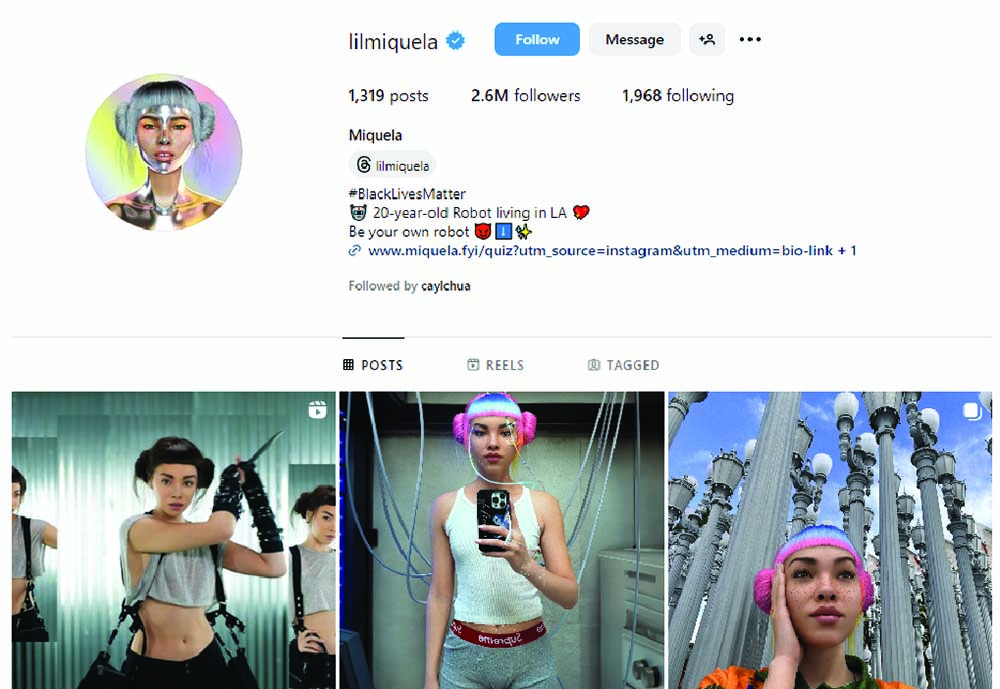
Virtual influencers are computer-generated characters designed to emulate real-life influencers on social media platforms. Leveraging advanced CGI technology, these digital avatars possess distinct personalities, lifestyles, and aesthetics, making them highly relatable and engaging to their followers.

The Impact of Virtual Influencers on Social Media Marketing

The rise of virtual influencers has reshaped the landscape of social media marketing in several key ways:

 virtual influencers

1. Authentic Engagement: Despite their virtual nature, these influencers offer authentic engagement with their followers. Their carefully crafted personas and captivating content foster meaningful connections, driving increased brand awareness and loyalty.

2. Creative Opportunities: Virtual influencers provide brands with unparalleled creative freedom. From imaginative storytelling to innovative brand collaborations, these characters offer endless possibilities for creative expression, helping brands stand out in a crowded digital space.

3. Targeted Reach: Virtual influencers enable brands to reach highly targeted audiences precisely. By tailoring their content and messaging to specific demographics, brands can effectively engage niche markets and drive conversions with greater efficiency.

4. Cost-Effectiveness: Compared to traditional influencer marketing campaigns, collaborating with virtual influencers offers a cost-effective solution for brands. Once created, these digital personalities require minimal maintenance and can be leveraged for multiple campaigns, maximising ROI.

Unlocking the Potential of Virtual Influencers for Your Brand

To capitalise on the potential of virtual influencers, brands can implement the following strategies:

1. Strategic Partnerships: Collaborate with virtual influencers whose personas align with your brand values and target audience demographics. By forging authentic partnerships, brands can amplify their message and drive engagement among followers.

2. Immersive Experiences: Create immersive storytelling experiences that resonate with your audience’s interests and aspirations. Whether through interactive campaigns or virtual events, leverage the unique capabilities of virtual influencers to captivate and inspire your audience.

3. Data-Driven Optimisation: Utilise data analytics tools to track engagement metrics, sentiment analysis, and audience demographics. By analysing these insights, brands can refine their virtual influencer strategies, optimise campaign performance, and achieve tangible results.

In conclusion, the rise of virtual influencers represents a paradigm shift in social media marketing, offering brands unprecedented opportunities for creativity, engagement, and targeted reach. By embracing this innovative trend and incorporating virtual influencers into their marketing strategies, brands can elevate their presence in the digital landscape and drive meaningful connections with their audiences.

Ready to harness the power of virtual influencers for your brand? Contact us today to learn more about our cutting-edge social media marketing solutions tailored to your unique needs and objectives. Let’s unlock the potential of virtual influencers together and take your brand to new heights in the digital realm!

Brand Positioning Through Shared Values (Part2) 

After we shared a journey around the core concepts of value-added marketing, we now invite you to embark on a free journey of liberal marketing train of thought, which will definitely change the way you think about marketing your business. Choose Your Value Approach When it comes to your product/service/membership, or whatever type of services you offer to your target audience, there are two certain facts: Other companies that offer the same product as yours do exist in the market. The differences between your product and theirs are subtle and narrow. Now that we can acknowledge these two simple facts, we can understand that positioning is probably the most important aspect of marketing. When similar products/services exist in the same market, the target audience tends to choose between them based mainly on the following metrics: Brand Price Quality Ease Availability Surely, we can not claim that this generalization encompasses all markets and all sectors worldwide, or that all customers would order them the same. However, these are the main focus points you need to use as a reference if you want to initiate your value-added marketing strategy. Let’s quickly visit them one by one: Brand This is the easiest to grasp, as it is exactly the goal of value-added marketing, is to build a trustworthy, well-positioned brand name in the market sector that your services belong to. But the question is how, and this is the question that we are trying to contribute to answering in this article. Let’s go ahead. Price We understand that pricing depends on various defining factors to reach, but it is definitely one of the top factors that can make your brand, product, or service stand out from the competing crowd. However, great attention needs to be paid to balance it with an acceptable quality, as the clients would expect a good deal without the quality being undermined. So, if you find any possibility to lower your prices/fees to a level that beats your competitors, or provide your clients with discounts, offers, bundles, or even freebies, do not miss the chance. Quality Here comes the core aspect, because quality here represents roughly 75% of value. You need to highlight those features of quality that your product guarantees, if not surpass your competitors with. Value-marketing your product/service through this lens can’t be just an overall display, it needs to be dissected into a feature-oriented marketing campaign that gives the utmost focus on the best features of the service you offer to the target audience. A good example would be if your company offers a Software As A Service (SAAS) online application, instead of just showcasing the features that might be shared with other SAAS providers in the same niche, direct your focus and budget towards those features that your competitors do not possess, or offer more users ‘s access in one subscription, etc. Sometimes the value lies in uniqueness, and that in itself is a quality, hence, a VALUE. Ease All customers, with no exception, are looking for ease that is attached to the process of attaining the service you provide and purchasing the product you offer them from the very first steps of applying for, purchasing or hiring your services to the end of the business transaction. This aspect needs to be handled carefully by your company before the marketing strategy is even born. Because in order for your business to find the ease features to highlight, you need to make them real first. Once you do that, direct your focus and budget towards these very aspects that assure your potential clients that they will attain “EASE” in every step of their clientele with your business. A good example would be what Amazon is focusing on lately aside from the seasonal sales offers and the usual advertising, they have an ad that has been running in the last couple of months where the model in the Ad says clearly: “Free, Easy Returns”. An ease factor that the clients might complain takes a lot of time with e-commerce brands. Availability Why do you think some supermarkets and pharmacies offer 24/7 services? Why would a health e-commerce app and website like iHerb, provide a “Notify me” option under the “Out of stock” announcement for a product? Why do e-commerce websites clearly announce that they deliver to all Emirates in the UAE? Why would Emirates Health Services avail multiple channels to book medical appointments or any other services? We have chosen to simplify the previously mentioned aspects to the maximum but feel free to explore other approaches, such as the 4 P’s or the 4 A’s approaches, to see what works best for your business. They are simply taking care of the availability factor. But this aspect extends to more than working hours, stock availability, delivery destinations, or booking methods. What does “Value” really stand for? But the value realm within the marketing empire expands further, and now let’s figure out what is hidden behind the term value. Basically, we have 4 types of value: Functional Value: Directly represents the value the customer would get when using the product or service you provide. This aspect exceeds the world of marketing to the actual quality of your services or products, and also the function your business performs to serve the needs of the client’s business. Emotional Value: Refers to those good vibes and the feel-good experience your client will have when/after acquiring what you offer. Remember that this aspect applies to what your brand represents, the convenience of the purchasing process, all the way to how easy it makes your client’s life to acquire your product/service. Economic Value: This value indicates the cost/benefit balance any customer would calculate by weighing the cost/price to purchase your product or service, the gains it would give him or his business, and the cost it would save him when he acquires them. Social Value: This covers the social effect your product/service would have on the quality and ease of interactions between people and businesses. Sometimes, it also expands to how much your product would boost the social status of the client. Positioning Through Shared Values Have you noticed already that in the traditional product-focused marketing approach, all businesses would highlight their product/service features. But the nuanced difference is that in value-based marketing, you will expand your methods and enhance your brand positioning by aligning your values with the customers’ values, to get closer to the clients’ needs on multiple levels. So, try your best to intertwine your company values with not only the needs but the values of the clients. Once you create this healthy kernel of shared values and connectivity between both brand and customers values, just sit back and watch the huge difference this would make for your business.

After we shared a journey around the core concepts of value-added marketing, we now invite you to embark on a free journey of liberal marketing train of thought, which will definitely change the way you think about marketing your business. 

Choose Your Value Approach 

When it comes to your product/service/membership, or whatever type of services you offer to your target audience, there are two certain facts: 

  1. Other companies that offer the same product as yours do exist in the market. 
  2. The differences between your product and theirs are subtle and narrow. 

Now that we can acknowledge these two simple facts, we can understand that positioning is probably the most important aspect of marketing. 

When similar products/services exist in the same market, the target audience tends to choose between them based mainly on the following metrics: 

  1. Brand 
  2. Price 
  3. Quality 
  4. Ease 
  5. Availability 

Surely, we can not claim that this generalization encompasses all markets and all sectors worldwide, or that all customers would order them the same. However, these are the main focus points you need to use as a reference if you want to initiate your value-added marketing strategy

Let’s quickly visit them one by one: 

Brand 
This is the easiest to grasp, as it is exactly the goal of value-added marketing, is to build a trustworthy, well-positioned brand name in the market sector that your services belong to. But the question is how, and this is the question that we are trying to contribute to answering in this article. Let’s go ahead. 

Price 
We understand that pricing depends on various defining factors to reach, but it is definitely one of the top factors that can make your brand, product, or service stand out from the competing crowd. 

However, great attention needs to be paid to balance it with an acceptable quality, as the clients would expect a good deal without the quality being undermined. 

So, if you find any possibility to lower your prices/fees to a level that beats your competitors, or provide your clients with discounts, offers, bundles, or even freebies, do not miss the chance. 

Quality 
Here comes the core aspect, because quality here represents roughly 75% of value. You need to highlight those features of quality that your product guarantees, if not surpass your competitors with. 

Value-marketing your product/service through this lens can’t be just an overall display, it needs to be dissected into a feature-oriented marketing campaign that gives the utmost focus on the best features of the service you offer to the target audience. 

A good example would be if your company offers a Software As A Service (SAAS) online application, instead of just showcasing the features that might be shared with other SAAS providers in the same niche, direct your focus and budget towards those features that your competitors do not possess, or offer more users ‘s access in one subscription, etc.  

Sometimes the value lies in uniqueness, and that in itself is a quality, hence, a VALUE. 

Ease 
All customers, with no exception, are looking for ease that is attached to the process of attaining the service you provide and purchasing the product you offer them from the very first steps of applying for, purchasing or hiring your services to the end of the business transaction. 

This aspect needs to be handled carefully by your company before the marketing strategy is even born. Because in order for your business to find the ease features to highlight, you need to make them real first. Once you do that, direct your focus and budget towards these very aspects that assure your potential clients that they will attain “EASE” in every step of their clientele with your business. 

A good example would be what Amazon is focusing on lately aside from the seasonal sales offers and the usual advertising, they have an ad that has been running in the last couple of months where the model in the Ad says clearly: “Free, Easy Returns”. An ease factor that the clients might complain takes a lot of time with e-commerce brands. 

Availability 
Why do you think some supermarkets and pharmacies offer 24/7 services? Why would a health e-commerce app and website like iHerb, provide a “Notify me” option under the “Out of stock” announcement for a product? Why do e-commerce websites clearly announce that they deliver to all Emirates in the UAE? Why would Emirates Health Services avail multiple channels to book medical appointments or any other services? 

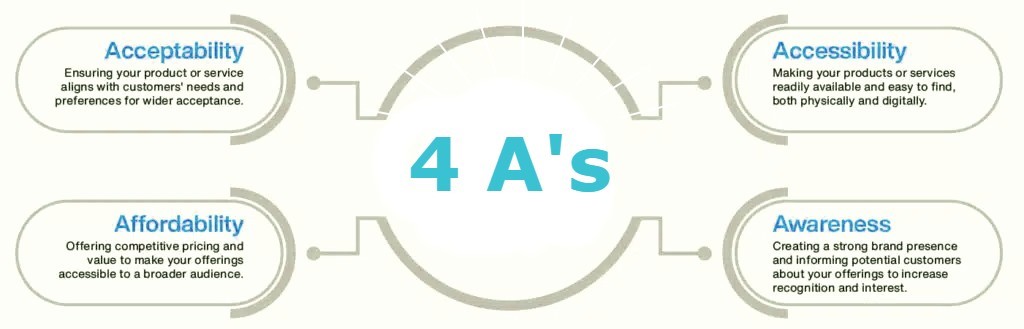
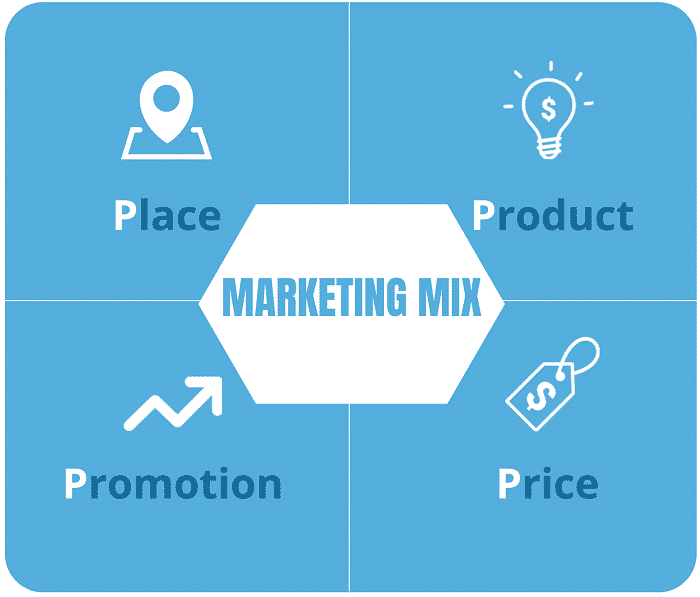
We have chosen to simplify the previously mentioned aspects to the maximum but feel free to explore other approaches, such as the 4 P’s or the 4 A’s approaches, to see what works best for your business. 

They are simply taking care of the availability factor. But this aspect extends to more than working hours, stock availability, delivery destinations, or booking methods. 

What does “Value” really stand for? 

But the value realm within the marketing empire expands further, and now let’s figure out what is hidden behind the term value. Basically, we have 4 types of value: 

Functional Value: 
Directly represents the value the customer would get when using the product or service you provide. This aspect exceeds the world of marketing to the actual quality of your services or products, and also the function your business performs to serve the needs of the client’s business. 

Emotional Value: 
Refers to those good vibes and the feel-good experience your client will have when/after acquiring what you offer. Remember that this aspect applies to what your brand represents, the convenience of the purchasing process, all the way to how easy it makes your client’s life to acquire your product/service. 

Economic Value: 
This value indicates the cost/benefit balance any customer would calculate by weighing the cost/price to purchase your product or service, the gains it would give him or his business, and the cost it would save him when he acquires them. 

Social Value: 
This covers the social effect your product/service would have on the quality and ease of interactions between people and businesses. Sometimes, it also expands to how much your product would boost the social status of the client. 

Positioning Through Shared Values 

Have you noticed already that in the traditional product-focused marketing approach, all businesses would highlight their product/service features. But the nuanced difference is that in value-based marketing, you will expand your methods and enhance your brand positioning by aligning your values with the customers’ values, to get closer to the clients’ needs on multiple levels. 

So, try your best to intertwine your company values with not only the needs but the values of the clients. Once you create this healthy kernel of shared values and connectivity between both brand and customers values, just sit back and watch the huge difference this would make for your business. 

Why Value-Added Marketing Is the Future? 

Why Value-Added Marketing Is the Future

Following global marketing trends is a stringent task all by itself, not to mention choosing which marketing wave to ride, which often proves even more baffling. 

This is where the role of marketing and advertising expertise comes in to assist a brand in finding its path through this complex web of intricacies that comprises the competitive marketing world we live in today. 

In this piece, we will accompany you on a unique trip towards an aspect of marketing that might initially sound singular and unvisited. Still, once we dive into it, we’ll discover that it might cover a vast area on the world marketing map. 

Why changing the term “Organic” helps? 

Switching the terminology might seem superficial and basic, until you figure out it isn’t! 

Everybody in the marketing realm knows the meaning of Organic marketing and Paid Marketing. But the experts in this field might advise you to change our understanding of what the term “Organic” means. Starting by changing the term into “Value-Added Marketing”. 

If you look deeper into this valuable advice, you will understand that it is actually an advice that wants to shift our thinking from “Linear” to “Circular”, which is proving to be a global megatrend that exceeds the boundaries of the marketing world, into the world of sales, economy and even environmental worlds. 

Beyond Cost Efficiency 

The first benefit that comes to mind when the term “Organic” is mentioned is certainly cost efficiency. However, the benefits of value-added marketing reach beyond this financial gain. 

As we discuss this critical concept further, you’ll understand the virtuous cycle it creates, as a circular organic visibility generator, which means the more organic (AKA: Value-Based/Value-Added) traffic your brand will achieve, the more potential that this traffic itself will create even more traffic on its own. 

Visitors/followers that get attracted to your brand based on value instead of targeting will surely enhance the level of Audience engagement, retention, social media presence and conversion rates. This approach turns your visitors into leads that feed your sales/reach cycles. 

Most importantly, value-added marketing, which relies on the quality of services and content that relays your services to audiences and highlights the unique features of your services/products or brand name, is the key to building better brand authority, positioning and trust. A combination that represents the elixir of life for any brand across all sectors. 

The Anti-Funnel Theory 

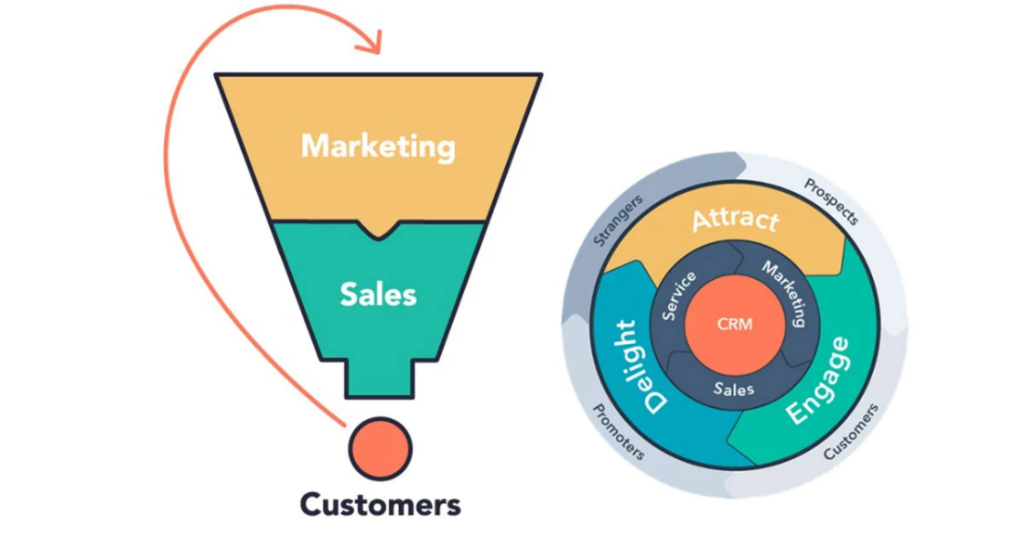
This shift can be made very lucid once we remind all marketers, salespersons and advertisers that the shift from the “Funnel” to the “Flywheel” falls under the antithesis approach we are highlighting today. 

We believe it’s about time Russell Brunson rethinks even the name of his “Click Funnels” website. We suggest that he changes the domain to “Click Flywheels” to be ready for a funnel-free future. 

The marketing world has been gradually abandoning the one-direction funnel where the customers lie at the BOFU, AKA: the bottom of the funnel, to make the target action/decision. Towards a flywheel where the customer moves from the bottom to the center, becoming a part of the sales, marketing and services cycle. 

In the funnel approach, the customer opens the door, makes a purchase, and then leaves from the exit door. On the other hand, the flywheel takes the customer in a continuous Ferris wheel, into a virtuous cycle of repeat sales, retention, and word-of-mouth, and recurrent visits and actions. 

In this modern business model, a conversion turns into engagement, lead generation turns into recurring client magnets, and the customer turns into an unpaid marketer for your business or, more correctly, a marketer who pays you! 

This is why we advise our clients to switch to the flywheel mentality by activating and leveraging tools such as newsletters, referral programs, freebies & samples, easier checkouts and payment methods and elevating inbound marketing slightly above outbound marketing. 

Aside from this shift from the paid to the organic, from the linear to the circular, from the funnel to the flywheel, and from non-value advertising to value-based activities, you ought to turn your customer service into customer engagement, turn a purchase into an experience. 

After adopting this fresh business model while devising your marketing strategy, you can sit back and reap the profits of this necessary shit. 

The Anti-Targeting Appeal 

Would you like being targeted? 

The irritant of being targeted is real, and ignoring it does not benefit any business. Online advertisers need to understand that the existence of advertisements on its own, which interrupt a video play, or a homepage loading or even intersects an article in the form of a banner or a popup, is in fact, a nuisance for the online browsers. 

This is why any business looking to advertise its products/services online needs to be extra careful about the concept of targeting. Accurate audience targeting is vital, as the interested audiences will be less irritated by the appearance of ads that are in the circle of their interests 

You need to define your target audience rigorously and understand the difference between different marketing goals. Are you looking for reach, branding, positioning, traffic, leads or conversions? 

Which would lead you to dividing and allocating your advertising budget in an accurate cost-effective manner. 

Searching for Clients vs The Searching Client 

Every business has the right to look for clients, but if you asked any business owner what makes you happier, a client who found your business online, maybe through word-of-mouth, or a client you have been targeting? The answer will mostly be the first option. 

Receiving online footfall – or should we call it clickfall – tells the business owner that they must have been doing something right and more satisfactory, that they don’t need to allocate more advertising expenses. 

Through SEO techniques and meticulous keyword planning, complemented by Google PPC campaigns, you can reach those clients who are already interested and searching for the products/services your company avails, which increases the conversion rate significantly. 

All-in-all, keep this golden rule alive in your temporal lobe: A searching client beats a targeted client any day of the advertising week. 

The Instinctive Side of Marketing 

A slight dip into the psychological side of marketing would tell you important information about those innate human instincts of seeking pleasure, desire, navigation, or curiosity. 

None of the positive human instincts mentioned above would relate to being targeted, are they? 

The instincts related to the human being targeted are all reflexive and negative, such as fear, avoidance, self-defence, self-preservation or territoriality. 

The instinctive side to which you ought to link your ads is definitely the positive one. When you strategize, design and write your advertisements, always keep in mind to satisfy the navigational seeking instinct, alluring and quenching curiosity, and pleasuring the desires and needs of the clients. 

On the targeting side, you might inadvertently provoke negative reflexive instincts in the client’s mind, such as fear of spending, avoiding being targeted for more spending, or getting territorial against the invasive nature of your ads, etc. 

This side of marketing is largely avoided by most advertisers and businesses. Sometimes, the only things on the marketer’s mind are FOMO or fear of missing out, designing a visually pleasing ad or using attractive words to get the attention or entice action from the client, which are also essential. However, be advised that they don’t stand alone. 

Remember, dealing with a client online is a world apart from handling a client or a prospect face-to-face. Unless animals develop online browsing traits or aliens begin to seek earthly products and services, the client is and will always be a human being. Disregarding the basic instincts of this human being remains a grave mistake of many businesses around the world.! 

See you in part 2 of the Value-Added Marketing series. 

COP28: The Road to the Future through UAE 

In the previous two parts of Nfinity8’s  COP28 series, we have highlighted the global institutions and foundational agreements upon which the core of global climate action is based on. As well as showcasing the importance of climate knowledge starting from the individual, local and regional levels to the global level. 

Now, as the UAE moves closer to embracing the momentous COP28 by the end of November 2023, few things are more important than to know where we stand today, the undeniable efforts exerted by the UAE leading into the global climate event, and eventually trying to envision the road to the future of our planet through the UAE lens. Let’s continue our climate knowledge journey together. 

The UAE as a Regional Collaboration Centre (RCCs) 

The workforce that the secretariat of the UNFCCC relies on are not distant individuals who dedicate their careers and lives to climate action separately. They actually conglomerate their efforts into organized groups starting from the local level, and the joint efforts of such groups helps find their regional and continental momentum when they collaborate together, under the supervision of the UNFCCC at the top. 

This is why it is essential to understand the concept of RCCs (AKA: Regional Collaboration Centres), as the UAE represents one of these crucial collaboration centres across the MENA and South Asia regions. 

RCCs were instituted to encourage more well-off countries to financially support the underdeveloped and least-developed countries of the world, through investments in the sustainability projects listed under their NDCs, to reward their efforts in reducing greenhouse gas emissions, and to expand the benefits of what is termed Clean Development Mechanism (CDM). Which is an UN-run carbon offset programme that allows and encourages countries to fund GHG emissions’ reduction initiatives in other countries, to meet emissions targets on the global level. 

On the 20th of October 2019, the regional collaboration centre for the entire MENA and South Asia regions has been established in the great emirate of Dubai, to institutionalize the collaboration between the UNFCCC and the World Green Economy Organization (WGEO), and to advance the Paris Agreement objectives in these regions and beyond. 

Patricia Espinosa, the then-Executive secretary of the UNFCC commented on this milestone at the time, saying: “I am delighted to celebrate the opening of RCC Dubai. Regional collaboration is a key to informing, activating and catalysing action on climate change”. Adding that: “This collaboration will be instrumental in enhancing the scale of climate action in the region in an efficient, impactful and collaborative manner.” 

This step confirmed the pivotal role that the UAE plays in filling the knowledge gaps in climate change on the fronts of adaptation, strategizing, access to climate finance, and leveraging the energy of women and youth to introduce fresh methods and innovative initiatives to address climate change. 

The UAE continues to play a vital role on the regional and international levels through its CDM approach, which helps channel resources to the countries that need it the most, facilitating the implementation of their NDCs and NAPs, so they can meet the objectives of the 2030 Sustainable Development Goals Agenda. 

COP27 > 28: Where We Stand Today? 

It is not an exaggeration to say that the world is going through a critical decade when it comes to conquering climate change. And to know where we are heading, we must always know where we stand. This is why it’s enlightening to highlight the five main takeaways from COP27, which was held in November 2022 in Sharm Al Sheikh, Egypt. 

The UAE government’s course of action attests that we have closely looked into these takeaways to contribute to overcoming the challenges and achieving the required goals. On the fronts of holding businesses and institutions to account, transparency of reporting, accountability of companies in the public, private and services sectors, and adopting a zero-tolerance approach for greenwashing. Most importantly, registering climate pledges through both the CSR UAE Fund, that we have discussed in a previous article, and on the UN’s Global Climate Action Portal

On another front, the UAE is committed to the global effort of establishing a dedicated fund for loss and damage for vulnerable countries that have suffered from climate change-induced disasters. Through its CDM commitment as an RCC, the UAE is proving its significance in mobilizing financial support for developing countries to bolster their NDCs regarding mitigation, adaptation and acquiring the most advanced climate technologies. 

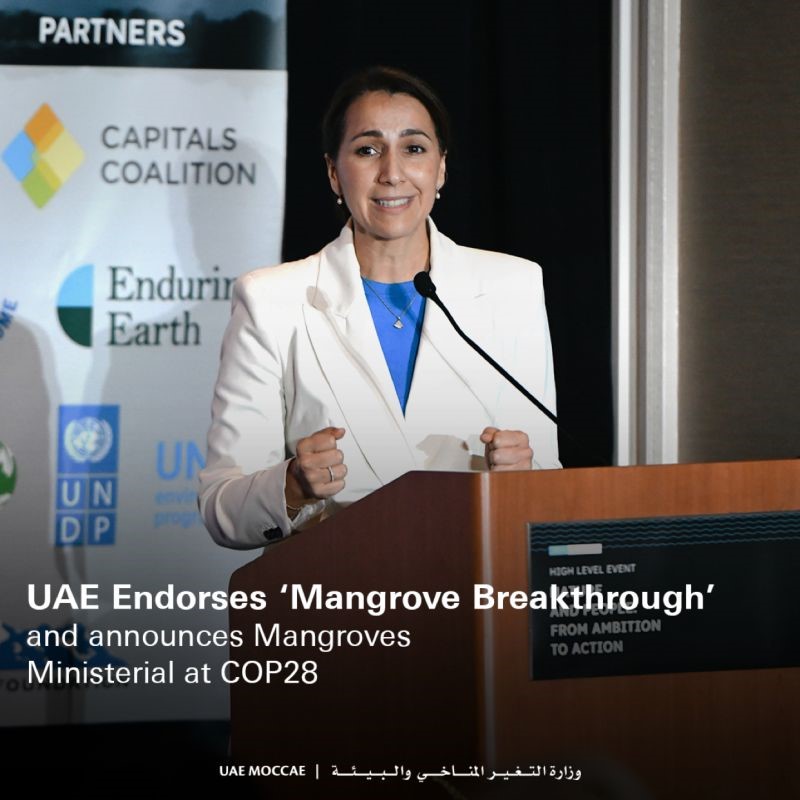
Regarding the nature-based climate solutions, the Mangrove Breakthrough – an integral part of COP27’s Adaptation Agenda- has been officially adopted by the UAE government. This was clearly conveyed by HE Mariam Almheiri, the UAE’s Minister of Climate Change and Environment, who stated:  

 “The Mangrove Breakthrough represents a significant stride towards reducing carbon emissions and preserving our planet’s natural treasures. The UAE recognises the paramount importance of mangroves in combating climate change and supporting our coastal communities, and we look forward to helping drive real on-the-ground change. I invite nations around the globe to support this unique initiative.” 

Ultimately, COP28 in the UAE, represents the perfect opportunity to pivot from climate pledges to implementation, using all possible approaches, so we can collectively reach the defined goal of limiting global warming to ~1.5 °C. 

The UAE’s Undeniable Climate Leadership 

As the United Arab Emirates leads the regional Race to Zero, we continue to enhance our economy in line with the vision of our wise leadership to adopt policies that foster sustainable practices in various sectors, especially in transport, manufacturing and agriculture. As well as adopting green infrastructure urban planning to perfect our union’s sustainable socio-economic development. 

These policies and initiatives were pinpointed during the “Road to COP28: Driving Collective Action in the UAE” event earlier this year, hosted by HE Razan Al Mubarak, UN Climate Change High-Level Champion for COP28. And as we create our sustainable future, the thriving business community across all sectors and company sizes are abiding by their commitments to net-zero emissions and exploiting every new inch that climate action opens on the path towards green transition. 

The fact that the UAE will establish the first-ever Education Pavilion in the history of COPs showcases the country’s efforts in leading regional and international efforts to include green education in the educational systems, as we focus on designing a new pathway to greener schools. We believe that education holds a unique position where it can build eco-conscious curriculums and schools, while taking the training of educators to the next level so they can play their role in instilling climate knowledge in the minds of learners of all ages, to prepare them from an early age for building sustainable green communities. 

Dubai is on its path to actualize the shift to implementation that was pushed to the top of the priorities list in Sharm Al Sheikh, through the non-stop efforts of the COP28 Presidency under the leadership of HE Dr. Sultan Ahmed Al Jaber, President-Designate for COP28, UAE. HE Dr. Al Jaber also spoke during the New York Climate Week earlier this year about the undeniable correlation between climate change and health, highlighting the lack of focus on this crucial aspect, which he plans to change during COP28, stating: “Our goal is to build resilient, equitable health systems capable of withstanding the impact of climate change.” 

Last September, HE Hamid Al Zaabi, Director General of the UAE’s Executive Office of Anti-Money Laundering and Counter-Terrorism Financing, clearly expressed that the UAE views poaching, illegal wildlife trade and trafficking as an imminent threat and a form of climate terrorism. Highlighting another front where the UAE leads the global crackdown on financial crimes funding wildlife trafficking, and worsening the biodiversity crisis. 

While the Sharjah Research, Technology, and Innovation Park (SRTIP) continues to be an active player in its mission of supporting and funding environment-friendly innovations, in fields like green transportation, sustainable infrastructure, solar power, green hydrogen energy and more.  

Earlier this year, the Sharjah Advanced Industry Accelerator (SAIA), has received more than 3500 submissions to its global innovative competition, the majority of which were centered around sustainability projects, energy technologies, transport logistics, environmental analysis, water technologies and beyond. 

Meanwhile in Abu Dhabi, Masdar, who has played a vital role in the country’s clean energy agenda since establishing the Abdu Dhabi Sustainability Week in 2008, continues to push forward to maintain the local, regional and global climate action momentum. 

Masdar, on its part, will host Youth 4 Sustainability forum during COP28. The company has been increasingly investing in renewable energy projects across more than 40 countries worldwide on its quest to achieve 100 gigawatts of power from renewables and to produce 1 million tonnes of green hydrogen per year by 2030. 

While the Abu Dhabi Sustainability Week organization prepares a series of structured collaborative activities to be run through the “ADSW Partnership Fund” planned to be held in the Green Zone at Dubai EXPO City during COP28. Simultaneously, keeping the focus on bolstering the role of women and young girls in climate change through its WiSER Initiative

Worth noting also, is the establishment of “Surpluss”, the Online sustainability exchange, which has been officially designated as an Accelerator by the UN-backed Race to Zero. A global campaign that catalyzes climate action for non-state actors to take rigorous and immediate action to cut global emissions in half by 2030. 

We have only highlighted some of many examples of the continuous efforts the UAE is dedicating to saving the future of our planet and our offspring. 

A New Climate Financial Infrastructure 

Did you know the world needs over $2.4 Trillion yearly to meet the climate challenge? And that less than 5% of this amount gets mobilized by donor countries annually?! 

This major challenge will be addressed at COP28 this year, as the world will try through the UAE to rebuild the confidence in the climate financial infrastructure. The stakes are high, and the risks are usually unpredictable, sudden and disastrous for people’s lives, especially in developing countries. 

At COP28, the UAE is committed to bringing this challenge to center-stage so we can implement the much-needed reforms to the current financial system, direct sufficient investments to new zero-carbon energy resources, agriculture, manufacturing and transportation systems, and increase the resilience of the Global South to climate change-induced natural disasters such as heatwaves, floods, droughts, famines, or storms. 

The world needs a significant economic transformation in the caliber of the industrial revolution, and COP28 holds great importance as it would start building on the momentum of on-going initiatives, such as the French Summit for a New Global Financing Pact, the Africa Climate Summit and the Barbados Bridgetown Initiative, to deliver tangible outcomes and solutions that could save the world. 

Nfinity8 will continue to play its role of boosting climate knowledge as part of the UAE society and the global community’s journey towards a better, cleaner and greener future for all humankind. 

COP28: Fostering Climate Knowledge 

COP28: Fostering Climate Knowledge 

As we approach COP28, we believe that augmenting Climate Knowledge is of prime importance to get everyone involved in shaping a cleaner future for the UAE and all humankind. Let’s launch into a trip to the climate space together. 
The Essential UNFCCC Secretariat 

The UNFCCC secretariat (UN Climate Change) is a United Nations entity formed in 1992 in Rio De Janeiro, as the main framework for international cooperation in combating climate change. A global assembly that amalgamates all worldwide responses and actions into a global synergy of climate action. 

For the last 30 years, UNFCCC has been a beehive of climate works that kept on increasing its institutional maturity and complexity until it reached an undeniable level of established architecture and hierarchy. It gained the international confidence it now enjoys as the main framework that aligns all global efforts towards achieving the common climate objectives. 

Its comprehensive strive to support the Kyoto Protocol and the Paris Agreement has augmented the scope of climate action into the concepts of increasing resilience and assistance climate programs directed to developing countries. Providing the basis on which all involved parties would play their parts in the global climate action strategy. 

What is the Global Stocktake (GST)? 

GST, Global Stocktake is a crucial mechanism through which the world aims to ensure the accelerated advancement of collective global climate actions to achieve our common goals. 

The primary role of the Global Stocktake is to measure the progress of climate action beyond the national level, as it evaluates the progression the entire world collectively made to achieve the climate goals set and ratified in the Paris Agreement, as well as detecting the gaps which would need to be bridged. 

GST assesses global climate action based on the following main aspects: 

1-     Mitigation 
To evaluate the global efforts of greenhouse gas emissions reduction to keep the global temperature rise below 2°C, or in an ideal world below 1.5°C

2-     Adaptation 
To measure each country’s progress to enhance its resilience and reduce vulnerability to adverse climate impacts. 

3-     Implementation 
To assess means of implementation and the alignment of financial flows, technology transfer and capacity building to climate-resilient development and supporting developing nations to achieve emissions reduction objectives and NDCs. 

But this mechanism exceeds the role of assessment, towards the bigger role of providing all concerned parties with the guiding foundation which leads governments and non-state actors towards boosting their climate action plans and Nationally Determined Contributions (NDC), and enhancing international cooperation between all NDCs. 

GST is designed to be conducted quinquennially, which means that every five years all signatory countries of the Paris Agreement, need to be informed about their updated NDCs to ensure that the steps each party takes, is an ambitious and effective contribution in the global drive towards conquering climate change. The stocktake will also establish the basis that enables all signatory countries to update and enhance their NDCs due to be done by 2025. 

This is the direction that each country’s efforts in the world need to be directed towards contributing with the most transformative plans of action across all fields and sectors of their national economies. And now, we will move on to highlighting the two main categories of climate action plans that the UNFCCC framework adopts. 

The Impact and Integration of NDCs and NAPs 

NDCs 

NDC stands for Nationally Determined Contributions, which is the required internal plan of each country that covers all the climate efforts across the sectors of the country’s economy in a comprehensive country plan that gets periodically updated, which eventually acts as a clear benchmark to assess and report the country’s progress. 

Each NDC has to use the most advanced technologies to achieve its climate commitments, define what assistance the country might need to execute the plan and continue to move forward by making each NDC more ambitious than the previously decided one. 

Finally, all the countries’ NDCs will be assembled as a global report of mitigation policies, programmes and actions. In the UNFCCC secretariat’s “NDC Synthesis Report”. 

The Global Stocktake system creates the groundwork for countries to update and improve their NDCs, which 

It is a system of commitments, checks and balances designed to push the boundaries of each country and boost the collaboration and integration of all the global efforts to warrant the best results and elevate our common ambitions to take every measure necessary to conquer the climate change crisis. 

But for these objectives to be reached, all concerned parties need to be as transparent as possible. And HE Dr Sultan Bi Ahmed Al Jaber put it best earlier this year when he announced: “We must be brutally honest about the gaps that need to be filled, the root causes and how we got to this place here today,” 

NAPs 

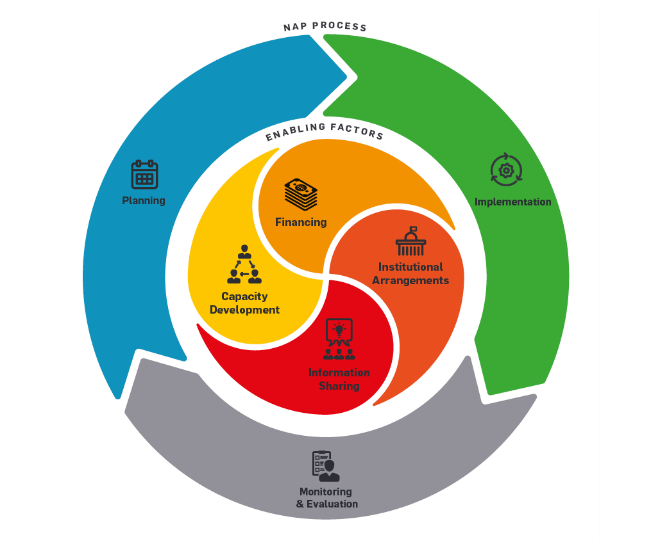
The UNFCCC was very keen on ensuring that whatever plans have been put in the developing countries’ NDCs, are receiving adequate support to make it easier for developing countries to adapt their planning with their set NDC and with the efforts of other developing and developed countries. 

This is where the importance of National Adaptation Plans (NAP) concept came into the picture since COP16, which was held in Cancun, Mexico. It clearly defines the needs of the Least Developing Countries (LDCs) and ensures that their medium to long-term adaptation needs are fulfilled, with the proper strategies. 

It is a process that helps countries look into their current and future climate risks and footprints and detect their gaps and vulnerabilities to eventually adapt these into their climate strategies. 

And the UNFCCC Secretariat has put in place the UN4NAPs initiative, which acts as an open channel for all countries to request data, technical information and support from other countries and grants them access to all the global climate expertise on climate action. 

These complementary and comprehensive efforts and all the attached local, regional and global initiatives and programs act in unison to advance the climate knowledge base, encourages the local and indigenous communities to take an essential part in their countries’ NDPs and NAPs, which leads to increasing the countries’ resilience by avoiding the loss and damage that might be caused by the adverse effects of climate change on both land and sea so that we can leave a safer and more sustainable future for our youth. 

Youth crucial role in shaping the planet’s future 

The future is for our youth, which is why the young men and women in this generation must be a part of the climate decision-making, as they are the ones who will shape that cleaner, greener and better future we all hope and work for. 

In light of this, our wise government has chosen 100 youth delegates from around the world to actively participate in efforts to protect our planet’s future on the personal, organizational, local and global levels. 

This inspiring decision is designed to enkindle engagement and a sense of responsibility regarding climate-conscious actions, for the youth to be a part of devised climate strategies and to acclimate their careers and lifestyles to the needs of the global movement towards a sustainable life on Earth. 

Even on a personal level, actions like opting to use public transportation or switching to electric vehicles instead of fuel-reliant private vehicles, supporting eco-friendly producers and reducing their carbon footprint and waste, going paperless and even vegan diets and improved cooking equipment are profoundly effective personal actions, if they are collectively adopted by enthusiastic young individuals. 

As we approach the launch of COP28 in the great Emirate of Dubai, various companies in the UAE are launching initiatives to engage the youth in projects and workshops to develop their knowledge and awareness and practical skills in sustainability, renewable energy, climate advocacy and all green practices. 

The most prominent example of this youth-engaging approach in the Youth 4 Sustainability (Y4S) initiative, developed by Abu Dhabi’s Future Energy Company (Masdar). Through this, the company invests in enabling young people and developing their skills to lead the future of sustainability. 

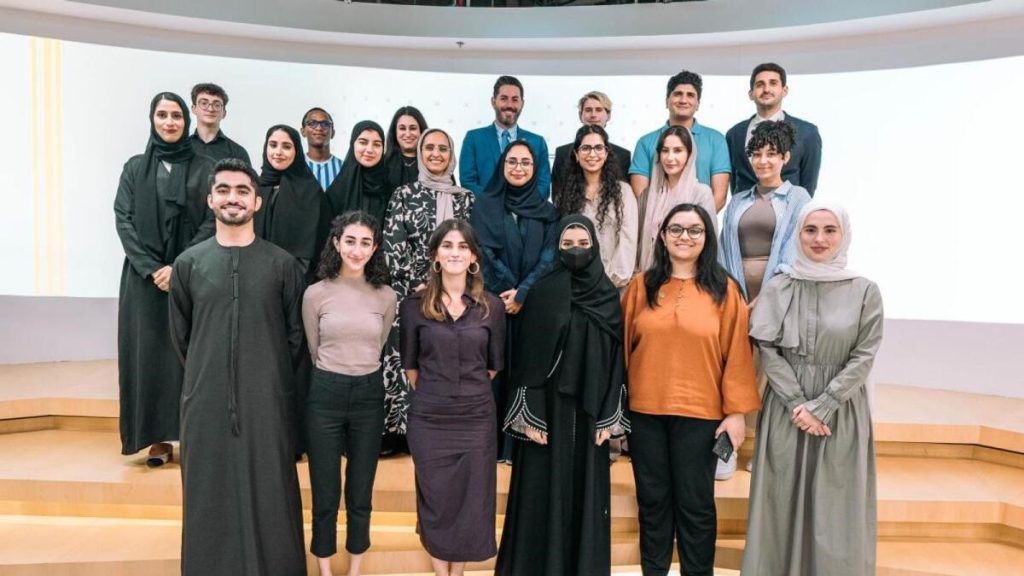
Last April, ten young climate activists from six different nationalities, alongside delegates from the United Arab Emirates, officially met at the Dubai Youth Hub as a significant manifestation of youth involvement in COP28, and in the climate action space in general. 

These brilliant young delegates got engaged in extensive discussions on encouraging youth to be involved in the climate conversation, planning their roadmap of collaboration as they move towards COP28, and the 18th UN Climate Change Conference of Youth (COY18) through initiatives such as the Youth Climate Champion, and institutes like the Arab Youth Center and the Federal Youth Authority. 

The UAE’s Ministry of Culture and Youth launched the first UAE Youth Climate Delegates Program in March 2023. A program which aims to act as a hub for youth voices in climate action, to increase their awareness and leverage their energy to empower them to get more involved in leading the way towards achieving a better future for themselves and the world. 

The UAE is actively involved in this youth empowerment model as part of its commitments towards climate action through the energy of youth. 

COP28 inspires the youth in our society and business world to get more involved in combating climate change, and it will indeed represent a significant step forward on our path towards making our planet a sustainable habitat. 

See you in Part 3 as we continue at Nfinity8, to empower the public with the essential climate knowledge.